Day Trading Cryptocurrency: Complete Beginner's Guide with Proven Techniques
Cryptocurrency day trading represents one of the most dynamic and potentially lucrative opportunities in modern finance, but it also carries significant risks that can devastate unprepared traders. Unlike traditional investing where positions are held for months or years, day trading involves opening and closing positions within the same trading day, capitalizing on short-term price movements in volatile crypto markets. This comprehensive guide provides everything beginners need to start day trading cryptocurrency safely and effectively, covering essential strategies, risk management techniques, and psychological principles that separate successful traders from those who lose money.
According to recent industry data, cryptocurrency markets now process over $100 billion in daily trading volume, with day traders accounting for approximately 35% of all crypto transactions. However, studies consistently show that 70-80% of retail day traders lose money, highlighting the critical importance of proper education and disciplined execution. This guide distills proven techniques from professional traders and market analysts to help you navigate these challenging waters with confidence.
Understanding Cryptocurrency Day Trading Fundamentals
Day trading cryptocurrency differs fundamentally from traditional stock day trading due to the unique characteristics of digital asset markets. Cryptocurrencies trade 24/7 across global exchanges, creating continuous opportunities but also requiring constant vigilance. The extreme volatility that characterizes crypto markets—with daily price swings of 10-20% not uncommon for altcoins—creates both profit potential and substantial risk.
Successful day trading begins with understanding market microstructure. Cryptocurrency exchanges operate differently from traditional stock exchanges, with varying fee structures, liquidity profiles, and order types. Centralized exchanges like Binance and Coinbase dominate retail trading, while decentralized exchanges (DEXs) offer different advantages and challenges. Understanding these platforms is essential before placing your first trade.
Key Differences Between Crypto and Traditional Day Trading
| Aspect | Cryptocurrency Day Trading | Traditional Stock Day Trading |
|---|---|---|
| Trading Hours | 24/7, 365 days | Market hours only (typically 9:30 AM - 4:00 PM EST) |
| Volatility | Extreme (often 5-20% daily) | Moderate (typically 1-3% daily) |
| Regulation | Limited, varies by jurisdiction | Heavily regulated (SEC, FINRA) |
| Market Access | Global, minimal barriers | Often requires substantial capital |
| Settlement | Near-instant (blockchain dependent) | T+2 settlement period |
This continuous market structure means crypto day traders must develop different routines and risk management approaches than their traditional counterparts. The absence of overnight gaps might seem advantageous, but it also means positions are never truly "safe" from adverse movements.
Essential Tools and Platforms for Crypto Day Trading
Choosing the right trading platform is arguably the most important decision a beginner day trader makes. The platform determines your access to markets, trading costs, security, and available tools. Major considerations include security features (two-factor authentication, cold storage), trading fees (maker/taker structure), available cryptocurrencies, and charting capabilities.
For beginners, starting with established platforms like Binance, Coinbase Pro, or Kraken provides reliability and comprehensive features. These exchanges offer advanced trading interfaces with real-time charts, multiple order types, and integrated technical analysis tools. Many successful traders eventually use multiple platforms to access different markets or take advantage of arbitrage opportunities.
Technical analysis software represents another critical tool category. While most exchanges provide basic charting, dedicated platforms like TradingView offer superior technical indicators, drawing tools, and social features. These platforms allow traders to test strategies using historical data before risking real capital—an essential step for developing confidence in your approach.
Risk Management: The Foundation of Successful Day Trading
Risk management separates profitable day traders from those who eventually blow up their accounts. The fundamental rule of crypto day trading risk management is never to risk more than 1-2% of your trading capital on any single trade. This means if you have a $10,000 account, your maximum loss per trade should be $100-$200. This conservative approach ensures you can survive inevitable losing streaks without catastrophic damage to your capital.
Position sizing represents the practical implementation of risk management. Calculate your position size based on your stop-loss level—the price at which you'll exit a losing trade. For example, if you're buying Bitcoin at $40,000 with a stop-loss at $39,200 (2% risk), and you're willing to risk $200, your position size would be $10,000 ($200 ÷ 0.02). This mathematical approach removes emotion from position sizing decisions.
Stop-loss orders deserve special attention in crypto markets, where "flash crashes" can trigger stops at unfavorable prices. Using mental stops (exiting manually at your predetermined level) avoids this issue but requires discipline. Some traders use a combination: a hard stop slightly wider than their actual risk tolerance, with a mental stop at their true risk level.
Technical Analysis for Crypto Day Trading
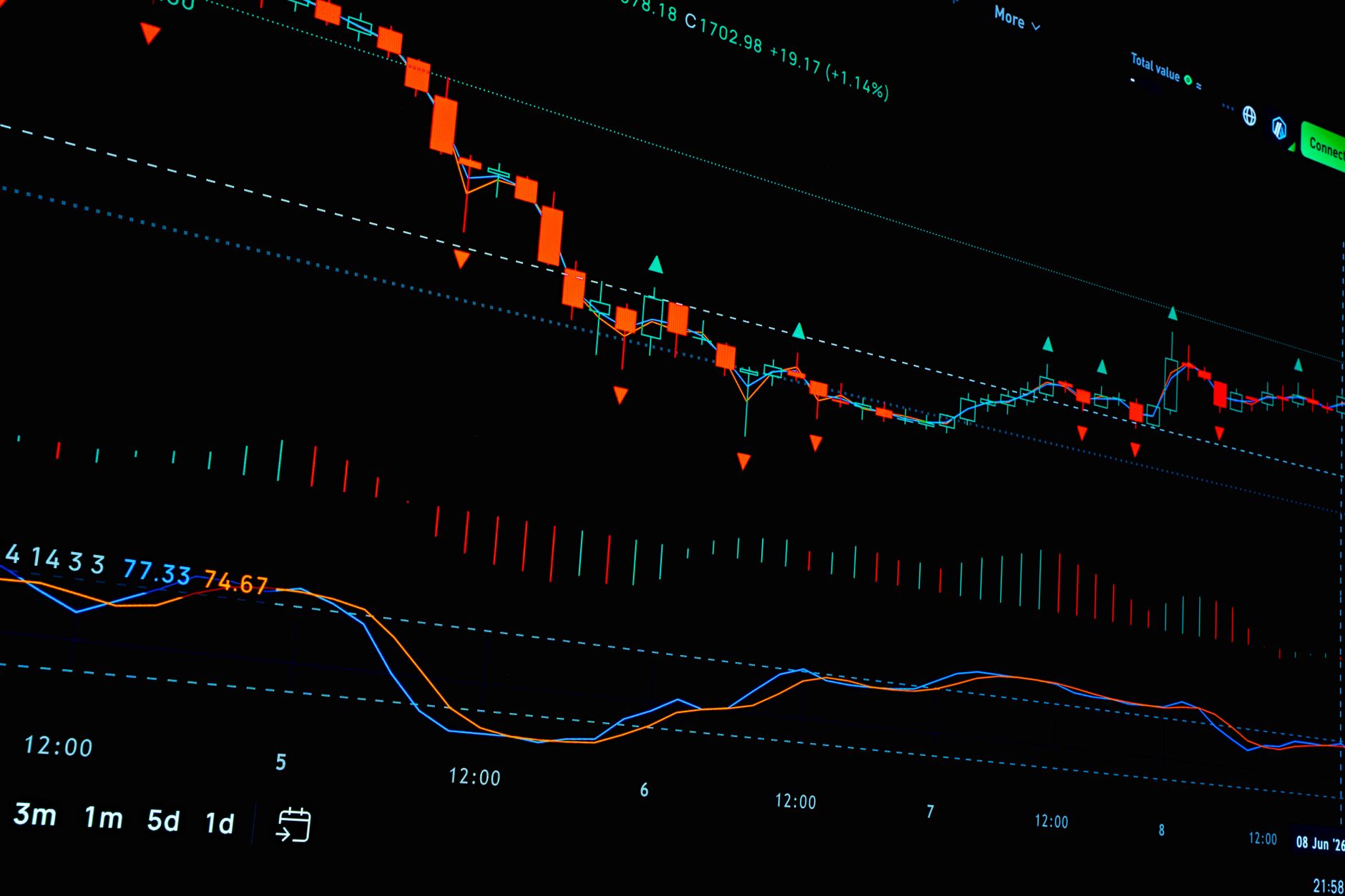
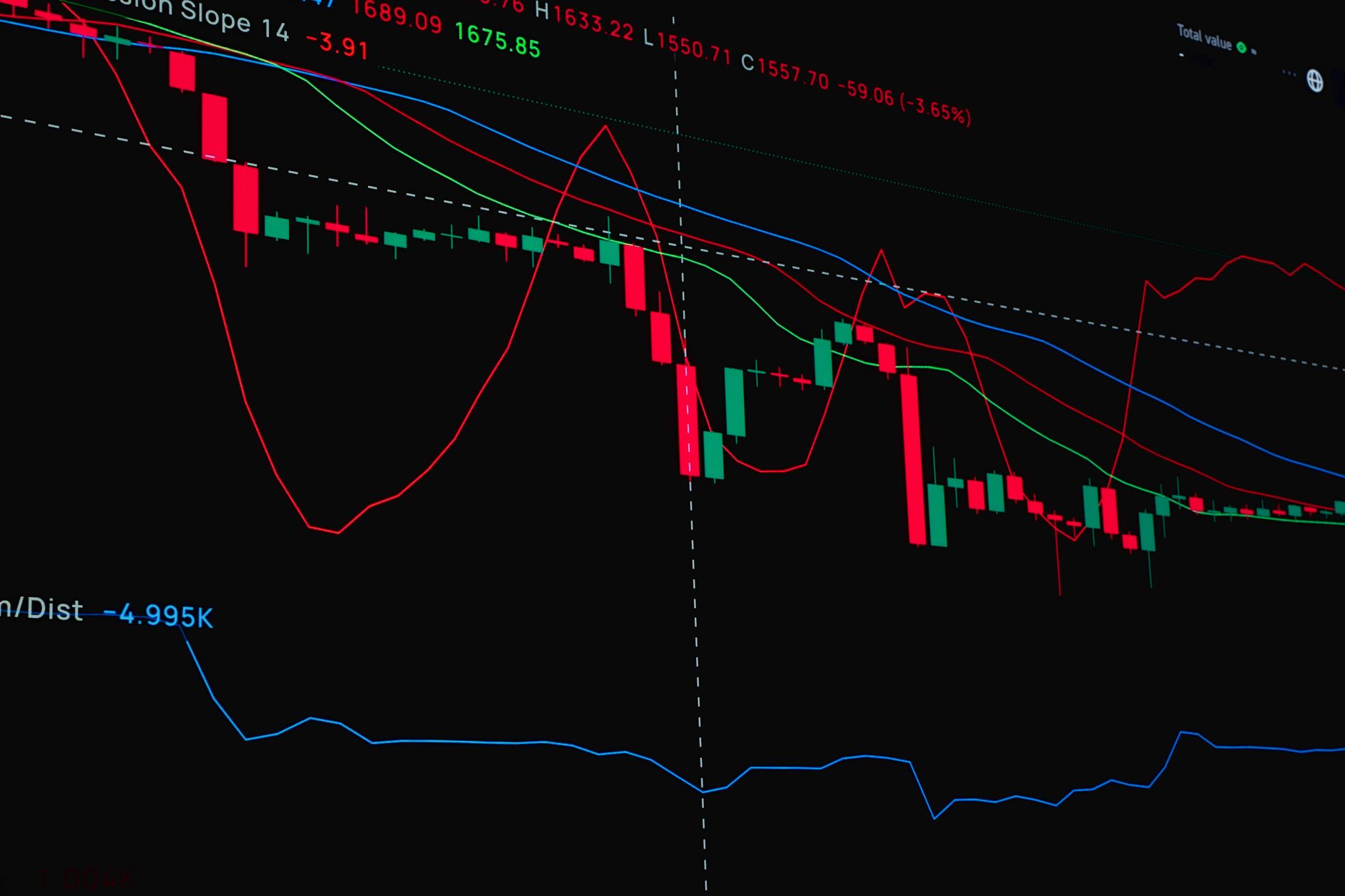
Technical analysis forms the backbone of most day trading strategies, providing objective criteria for entry and exit decisions. Unlike fundamental analysis which examines underlying value, technical analysis focuses purely on price action and volume patterns. In cryptocurrency markets, technical analysis proves particularly valuable due to the limited fundamental data available for many projects.
Key technical indicators for crypto day trading include moving averages (particularly the 20, 50, and 200-period), Relative Strength Index (RSI), Bollinger Bands, and volume profile. These tools help identify trends, momentum, support/resistance levels, and potential reversal points. Successful traders typically master 3-5 indicators rather than attempting to use dozens simultaneously.
Chart patterns offer another powerful technical analysis tool. Common patterns in crypto markets include triangles (symmetrical, ascending, descending), head and shoulders, double tops/bottoms, and flags/pennants. These patterns often precede significant price movements, providing high-probability trading opportunities when combined with other confirming signals.
Example: Trading a Bull Flag Pattern
Let's examine a concrete example using Ethereum. Suppose ETH has rallied from $2,500 to $3,200 over three days on increasing volume—this forms the "flagpole." The price then consolidates between $3,100 and $3,150 for two days on declining volume, forming a rectangular "flag." Technical analysis suggests this pattern typically resolves with continuation of the original trend. A day trader might enter long when price breaks above $3,150 with increased volume, placing a stop-loss below the flag pattern at $3,080, and targeting a move equal to the flagpole ($700) to approximately $3,850.
Fundamental Catalysts and News Trading
While technical analysis dominates day trading decisions, fundamental catalysts create many of the most profitable opportunities. Cryptocurrency markets react strongly to news events including regulatory announcements, protocol upgrades, exchange listings, partnership announcements, and macroeconomic developments. Successful news traders develop systems for monitoring information sources and executing trades rapidly when catalysts occur.
Key information sources include official project announcements (Twitter, blogs), regulatory news (SEC, CFTC statements), exchange announcements (new listings, maintenance), and on-chain data (large wallet movements, exchange flows). Tools like CryptoPanic aggregate news from multiple sources, while blockchain explorers like Etherscan provide real-time on-chain data.
The challenge with news trading lies in separating significant catalysts from noise. Not every announcement moves markets substantially. Experienced traders assess the novelty and materiality of news, considering factors like whether information was already priced in, the credibility of the source, and potential follow-on effects. They also recognize that "buy the rumor, sell the news" often applies—prices frequently peak before major announcements then decline afterward.
Psychology and Emotional Discipline
Trading psychology represents the most underestimated aspect of day trading success. The emotional rollercoaster of watching money fluctuate rapidly triggers primal fear and greed responses that undermine rational decision-making. Developing emotional discipline requires recognizing these psychological traps and implementing systems to neutralize them.
Common psychological pitfalls include revenge trading (trying to immediately recover losses), FOMO (fear of missing out on moves), overtrading (taking marginal setups out of boredom), and confirmation bias (seeking information that supports existing views). Each of these behaviors typically leads to losses, yet they feel intuitively correct in the moment.
Professional traders combat these tendencies through strict routines, trading journals, and pre-defined rules. A trading journal documenting every trade—including reasoning, emotions, and outcomes—provides objective data for improvement. Pre-defined rules for entries, exits, and position sizing remove discretion during emotionally charged moments. Many successful traders also practice mindfulness or meditation to improve emotional regulation during trading sessions.
Proven Day Trading Strategies for Cryptocurrency
Successful day trading requires a systematic approach rather than random guessing. Below are three proven strategies that beginners can adapt to their risk tolerance and time availability.
Breakout Trading focuses on identifying consolidation periods followed by directional moves. Traders monitor support/resistance levels, waiting for price to break through with increased volume. This strategy works particularly well in trending markets and around key psychological levels (round numbers, previous highs/lows). The key challenge lies in distinguishing genuine breakouts from false breakouts—using volume confirmation and waiting for the close beyond the level improves accuracy.
Mean Reversion strategies profit from the tendency of prices to return to average values after extreme moves. When an asset becomes statistically overbought or oversold (using indicators like RSI or Bollinger Bands), mean reversion traders take positions opposite the recent move, expecting a pullback. This approach works best in ranging markets and requires precise timing, as extreme moves can become more extreme before reversing.
Scalping involves taking numerous small profits throughout the day, typically holding positions for seconds to minutes. Scalpers capitalize on small inefficiencies in order books, using level 2 data to identify areas of support/resistance. This high-frequency approach requires intense focus, low trading costs, and excellent execution speed. While individual profits are small, they can accumulate significantly over many trades.
Developing Your Trading Plan
A comprehensive trading plan transforms random actions into systematic business operations. Your plan should document your strategy, risk parameters, performance metrics, and improvement processes. Treat trading as a professional endeavor requiring the same planning as any other business venture.
Essential components of a trading plan include:
- Strategy Definition: Clear rules for identifying setups, entering positions, managing trades, and exiting (both profitably and at a loss)
- Risk Parameters: Maximum risk per trade, maximum daily loss limit, position sizing methodology
- Performance Metrics: How you'll track results, including win rate, average win/loss ratio, expectancy, and maximum drawdown
- Review Process: Regular analysis of trades to identify strengths and weaknesses
- Market Conditions: Which strategies you'll use in trending vs. ranging markets, high vs. low volatility environments
Documenting this plan creates accountability and provides a reference during challenging periods. Many traders experience "drift"—gradually abandoning their plan during losing streaks or periods of overconfidence. A written plan helps recognize and correct this drift before it causes significant damage.
Tax Implications and Legal Considerations
Cryptocurrency taxation represents a complex but essential consideration for day traders. In most jurisdictions, including the United States, cryptocurrencies are treated as property for tax purposes. This means every trade—even cryptocurrency-to-cryptocurrency swaps—creates a taxable event requiring calculation of capital gains or losses.
Day traders face particular challenges with tax reporting due to the high volume of transactions. Using specialized crypto tax software like CoinTracker or Koinly automates this process by importing exchange data and calculating gains/losses according to your country's rules. Maintaining accurate records from day one prevents enormous headaches during tax season.
Legal considerations vary significantly by jurisdiction. Some countries have embraced cryptocurrency trading with clear regulations, while others restrict or ban it entirely. Understanding your local laws regarding cryptocurrency trading, reporting requirements, and allowable deductions is essential before beginning. When in doubt, consult a tax professional familiar with cryptocurrency regulations.
Common Beginner Mistakes and How to Avoid Them
Learning from others' mistakes accelerates the journey to profitability. Below are the most frequent errors made by new crypto day traders, along with strategies to avoid them.
Trading Without a Stop-Loss: Perhaps the most catastrophic beginner mistake is entering trades without predetermined exit points for losses. Emotional attachment to positions leads traders to hold losing trades hoping they'll recover, often resulting in losses far exceeding reasonable risk limits. Solution: Always determine your stop-loss before entering any trade, and execute it mechanically.
Overleveraging: Cryptocurrency exchanges offer extremely high leverage—up to 100x on some platforms. While this magnifies potential profits, it also magnifies losses, often leading to complete account liquidation during normal market fluctuations. Solution: Begin with no leverage, then gradually increase to conservative levels (2-5x) only after demonstrating consistent profitability.
Chasing Performance: Beginners often jump between strategies after short periods of underperformance, abandoning approaches just before they would have become profitable. This "strategy hopping" prevents developing deep expertise in any one methodology. Solution: Commit to a strategy for a minimum period (e.g., 100 trades) before evaluating its effectiveness.
Ignoring Trading Costs: High-frequency trading generates substantial fees that can eliminate profits. Many beginners focus only on entry price without considering exchange fees, funding rates (for perpetual contracts), and slippage. Solution: Calculate all costs when determining position size and profit targets, choosing exchanges with competitive fee structures.
Advanced Techniques for Experienced Beginners
Once you've mastered basic strategies and risk management, consider incorporating these advanced techniques to improve performance.
Multiple Time Frame Analysis involves examining the same asset across different time frames to identify alignment of trends. For example, you might use the 4-hour chart to determine the primary trend direction, the 1-hour chart to identify intermediate structure, and the 15-minute chart for precise entry timing. This approach filters lower-probability trades that go against higher-timeframe trends.
Order Flow Analysis examines the actual buy and sell orders in the market rather than just price action. Tools like heat maps, volume profile, and time & sales data reveal where large traders are placing orders, providing insight into potential support/resistance levels. While more complex than basic technical analysis, order flow can identify high-probability reversal zones before they appear on standard charts.
Correlation Trading exploits relationships between different cryptocurrencies. Many altcoins move in correlation with Bitcoin—when BTC rises or falls, altcoins often follow with amplified moves. Understanding these relationships allows traders to position in correlated assets when anticipating Bitcoin movements, or to trade divergences when correlations break down.
Building Toward Consistency and Scaling
The ultimate goal of day trading isn't individual profitable trades but consistent profitability over time. Achieving consistency requires treating trading as a skill developed through deliberate practice rather than a get-rich-quick scheme. This mindset shift alone separates successful traders from the majority who eventually quit.
Scaling your trading involves gradually increasing position sizes as you demonstrate consistent profitability and emotional control. A common approach is the "10% rule"—increasing your base position size by no more than 10% after each profitable month, while decreasing by 20% after losing months. This asymmetric scaling protects capital during drawdowns while allowing growth during profitable periods.
Remember that all traders experience drawdowns—periods of losses that test psychological resilience. The key to long-term success isn't avoiding drawdowns but managing them effectively through strict risk controls and emotional discipline. Professional traders measure success not by individual trades or even monthly results, but by quarterly and annual profitability.
Conclusion: Your Path Forward in Crypto Day Trading
Day trading cryptocurrency offers legitimate profit potential but demands serious commitment to education, risk management, and emotional discipline. This comprehensive guide has provided the foundational knowledge needed to begin your journey, from understanding market mechanics to implementing proven strategies. Remember that successful trading develops through consistent practice, not theoretical knowledge alone.
Begin with a demo account to practice strategies without financial risk, then transition to small live positions as you gain confidence. Document every trade in a journal, regularly review your performance, and continuously refine your approach based on objective data rather than emotions. The cryptocurrency markets will continue evolving, requiring ongoing education about new assets, regulations, and trading technologies.
For further learning, explore our detailed guides on specific trading strategies, technical analysis indicators, and risk management techniques. The journey to becoming a consistently profitable day trader requires patience and perseverance, but the skills you develop will serve you throughout your financial life. Approach each trading day as an opportunity to learn and improve, and remember that preserving capital during the learning phase is more important than generating profits.