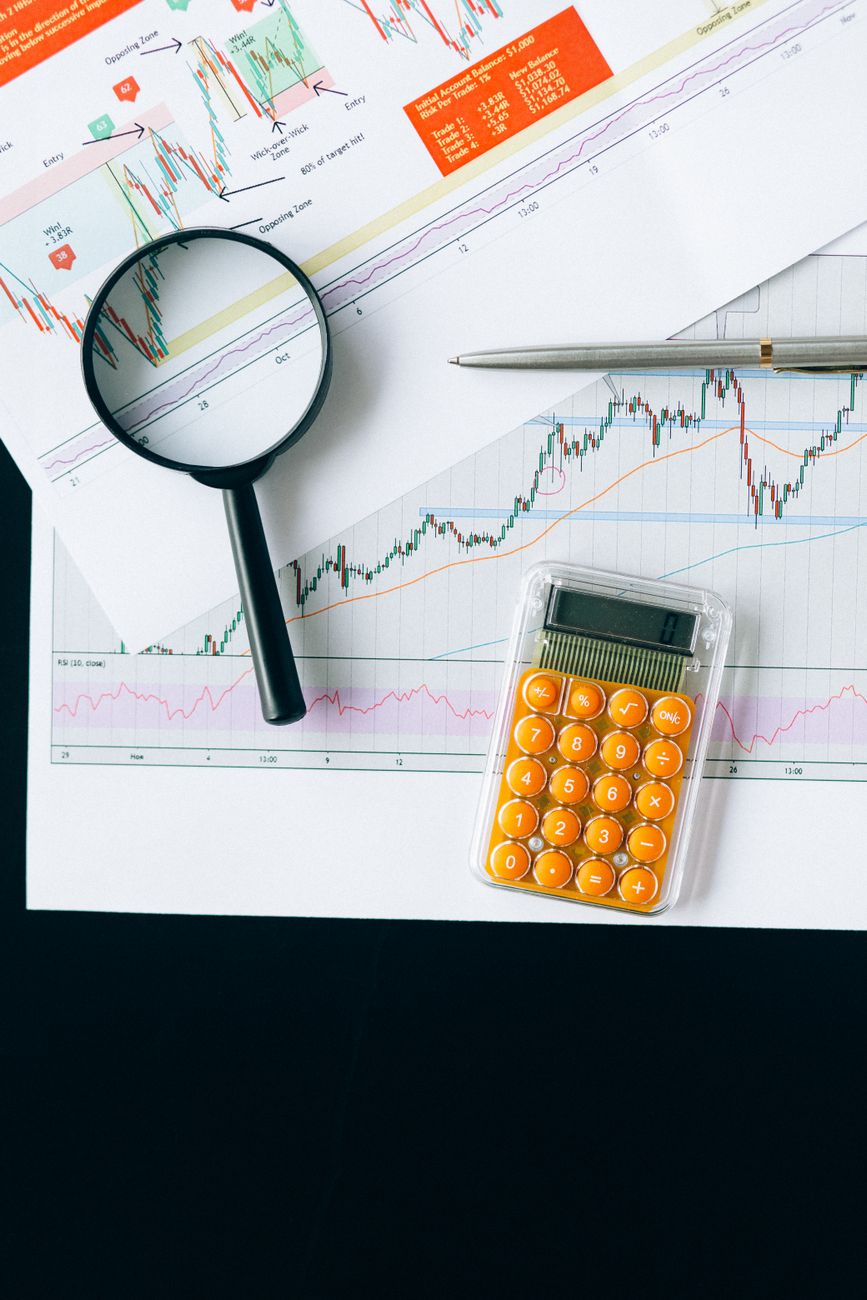
The Ultimate Guide to Crypto Market Intelligence
In the fast-paced world of cryptocurrency, success hinges on timely, accurate information. Crypto market intelligence—the systematic gathering, analysis, and application of data from blockchain networks, exchanges, and social sentiment—has become the backbone of informed trading and investment. This guide covers everything from fundamental and technical analysis to on-chain metrics, sentiment tracking, and risk management. By the end, you’ll have a framework to make data-driven decisions and stay ahead in volatile markets.
Why Market Intelligence Matters in Crypto
Unlike traditional markets, crypto operates 24/7 with extreme volatility and relatively low liquidity. Market intelligence helps you:
- Identify trends early before mainstream news.
- Manage risk by spotting anomalies like whale movements.
- Avoid FOMO and panic selling through objective data.
- Find alpha in inefficiencies across exchanges.
A 2023 study by CoinMetrics found that traders using on-chain data outperformed those relying solely on price action by 18% annually. With over 20,000 cryptocurrencies and $1 trillion in market cap, the need for robust intelligence has never been greater.
Core Components of Crypto Market Intelligence
Fundamental Analysis
Fundamental analysis evaluates a project’s intrinsic value through:
- Team & Development: Check GitHub commits, developer activity, and team background.
- Tokenomics: Supply schedule, inflation rate, and distribution.
- Adoption: Active addresses, transaction volume, and active developers.
- Partnerships: Real-world integrations and institutional interest.
Example: In 2024, Ethereum’s transition to proof-of-stake reduced energy use by 99%, attracting institutional investors—a fundamental shift captured by on-chain staking metrics.
Technical Analysis
Technical analysis uses price charts and volume to predict future movements. Key tools include:
- Moving Averages (MA): 50-day and 200-day MA for trend direction.
- Relative Strength Index (RSI): Overbought (>70) or oversold (<30) signals.
- Bollinger Bands: Volatility indicators.
- Volume Profile: Shows where most trading occurs.
Table: Common Technical Indicators
| Indicator | Purpose | Best Use Case |
|---|---|---|
| Moving Average Convergence Divergence (MACD) | Trend momentum | Confirming trend reversals |
| Ichimoku Cloud | Support/resistance zones | Multi-timeframe analysis |
| Fibonacci Retracement | Identify pullback levels | Entry points |
While technical analysis is widely used, combining it with on-chain data yields higher accuracy.
On-Chain Metrics
On-chain data comes directly from blockchain transactions. Crucial metrics:
- Active Addresses: Measures network usage.
- Transaction Volume: Raw economic activity.
- Exchange Balances: Inflows/outflows signal selling or accumulation.
- Miner Revenues and Hashrate: For proof-of-work networks.
- Stablecoin Supply Ratio (SSR): Indicates market appetite for risk.
For a deeper dive, check our on-chain metrics guide.
Sentiment Analysis
Sentiment analysis gauges public mood via:
- Social Media: Twitter, Reddit, Discord mentions and sentiment scores.
- News Headlines: Positive or negative framing.
- Fear & Greed Index: Composite of volatility, volume, surveys, and social media.
- Funding Rates: Futures markets show if longs or shorts dominate.
Insight: In March 2024, the Crypto Fear & Greed Index hit 10 (extreme fear), which historically preceded a 30% rally. Contrarian positioning often works.
Tools and Platforms for Market Intelligence
Data Aggregators
- CoinMarketCap & CoinGecko: Price, volume, market cap, and basic on-chain data.
- Nansen: Smart money flows and wallet labeling.
- Dune Analytics: Custom dashboards for any blockchain.
- Glassnode: Comprehensive on-chain metrics.
Trading Platforms with Analytics
- The Crypto Dash: Integrated news, analysis, and trading.
- Binance: Built-in charts and indicators.
- TradingView: Advanced charting with community scripts.
Sentiment Trackers
- LunarCrush: Social engagement and sentiment.
- Santiment: Social volume, development activity, and on-chain data.
- The Tie: News sentiment and relevance scores.
Table: Tool Comparison
| Tool | Best For | Cost |
|---|---|---|
| Glassnode | Advanced on-chain analysis | $29/month |
| Nansen | Smart money tracking | $150/month |
| CoinMarketCap | Quick market overview | Free |
| The Crypto Dash | All-in-one intelligence | Free+ |
How to Set Up a Crypto Intelligence Dashboard
A personalized dashboard saves time and highlights key metrics. Steps:
- Define your strategy: Scalping, swing trading, or long-term investing.
- Select 3-5 core metrics: For long-term, focus on active addresses, exchange balances, and development activity.
- Choose tools: Use Dune Analytics for custom queries or The Crypto Dash for pre-built widgets.
- Set alerts: Price levels, volume spikes, or unusual whale movements.
- Review daily: Spend 15 minutes scanning your dashboard to catch trends.
Example Dashboard for swing traders:
- BTC/USD 4-hour chart with RSI and volume.
- Top 10 exchange net inflows (Nansen).
- Fear & Greed Index.
- Funding rate for BTC perpetual futures.
Data Sources and Verification
Not all data is reliable. Always:
- Cross-check sources: If CoinGecko shows a sudden price pump, verify on Binance or Coinbase.
- Beware of wash trading: Low-volume exchanges may fake volume. Use platforms like CoinMarketCap’s “Confidence” rating.
- Use authenticated APIs: Prefer official APIs from blockchain nodes.
- Check timestamps: Latency matters—real-time vs. delayed data affects decisions.
Stat: A 2023 report by Blockchain Transparency Institute found that up to 60% of exchange volume on unregulated platforms was fake. Stick to top-tier exchanges for reliable data.
Case Study: Applying Market Intelligence to a Trade
Scenario: On April 12, 2024, Ethereum (ETH) traded at $3,200. Your dashboard shows:
- Exchange outflows spiking (whales moving ETH to cold storage).
- Active addresses at an all-time high.
- Developer activity on GitHub steady.
- Fear & Greed Index at 72 (greed), but funding rates neutral.
Action: Buy ETH at $3,200 with a stop-loss at $3,000. Two weeks later, ETH hits $3,800 (+18.75%) following a spot ETF announcement. The on-chain accumulation signal preceded the news.
Takeaway: Fundamental and on-chain data led to an informed entry, not speculation.
Risks and Limitations
- Lagging indicators: On-chain data often reflects past activity.
- False signals: A single whale transaction can distort exchange balances.
- Overemphasis on retail sentiment: Whales manipulate social media.
- Data silos: No single tool covers all blockchains perfectly.
Integrating AI Into Crypto Market Analysis
AI enhances market intelligence through:
- Predictive models: Machine learning on historical data for price forecasts.
- Natural Language Processing (NLP): Analyze news and social media for sentiment.
- Anomaly detection: Flag unusual transactions or price patterns.
Example: GPT-based models can summarize daily market reports. However, for regulatory insights, always consult a professional.
Conclusion
Crypto market intelligence is not an option—it’s a necessity. By combining fundamental, technical, on-chain, and sentiment analysis, you can navigate volatility with confidence. Start small: pick one new metric this week, integrate it into your routine, and gradually build a personalized dashboard. Remember, the goal is not to predict the future but to make better decisions with the data available.
For more resources, explore our cryptocurrency market analysis and crypto market data guides.