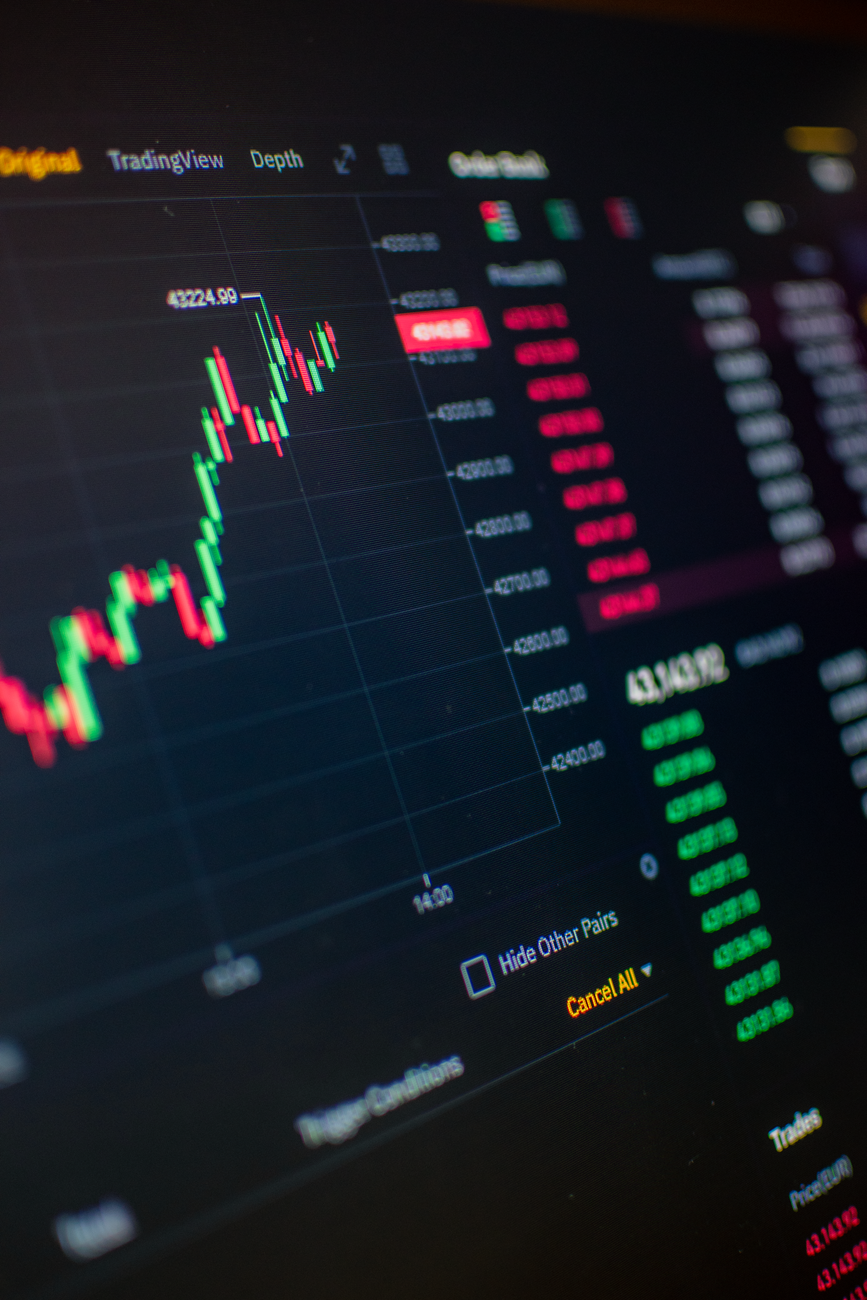
Stop-Loss and Take-Profit Orders: Essential Risk Management for Crypto Traders
Stop-loss and take-profit orders are automated exit instructions that protect crypto traders from emotional decision-making, capping losses and locking in gains without constant screen-watching. A stop-loss order closes a position when the price moves against you, while a take-profit order exits a trade at a predetermined gain. Together, they form the backbone of disciplined risk management.
Executive Summary / Key Results
By consistently using stop-loss and take-profit orders, traders can achieve several critical outcomes:
- Avoid catastrophic losses: A stop-loss caps the maximum loss per trade at a predetermined level, preventing emotional holds that turn small dips into portfolio-wrecking drawdowns.
- Lock in profits systematically: Take-profit orders ensure you exit at your target, removing the temptation to hold for “just a little more” and risking a reversal.
- Improve trading psychology: Automated exits remove the most dangerous decisions from moments of maximum emotional pressure.
- Enable 24/7 trading coverage: Crypto markets never sleep. Orders execute even when you're away from the screen.
Background / Challenge
Crypto trading is notoriously volatile. Bitcoin can swing 10% in hours, and altcoins routinely move 30% or more in a single day. This volatility creates profit opportunities but also exposes traders to severe downside risk. Without predefined exit plans, even successful strategies can fail due to emotional biases—fear and greed—that lead traders to hold losing positions too long or exit winners too early.
For example, a trader who buys Bitcoin at $60,000 and sets no stop-loss might watch it drop to $30,000, losing 50% of their investment. Had they set a stop-loss at $55,000, they would have exited with a manageable loss of about 8.3%. Similarly, a take-profit order at $65,000 would have secured an 8.3% gain instead of hoping for $70,000 and watching the price fall back.
The challenge is that many traders, especially beginners, either skip these orders entirely or misuse them—e.g., setting stops too tight (getting stopped out by normal volatility) or too loose (allowing excessive losses). A disciplined approach is essential.
Solution / Approach
According to crypto trading experts, the best way to implement stop-loss and take-profit orders is to define your exit before you enter a trade. "Stop-loss orders should be set before you enter, not after," advises a trading strategy guide. "Defining your exit before the trade opens removes the most dangerous decision from the moment of maximum emotional pressure". This pre-commitment turns risk management from an impulse into a rule.
The approach involves three steps:
- Mark the invalidation level first. If price reaches this level, your trade idea is wrong. This becomes your stop-loss trigger.
- Map one or two realistic take-profit areas using prior highs, resistance, and volume context.
- Size the trade from the stop distance, not from excitement. If your stop is 5% below entry, you can risk, say, 1% of your portfolio per trade, adjusting position size accordingly.
Stop-Market vs. Stop-Limit Orders
A key decision is whether to use a stop-market or stop-limit order for your stop-loss. As one expert explains, "I use Stop-Market for the vast majority of my stop-losses... the primary job of a stop-loss is to get you out. A Stop-Limit order sounds appealing in theory because you control the exit price, but in fast-moving or gapping markets, the price can blow right through your limit, leaving you stuck in a losing position that keeps bleeding". Stop-market orders guarantee execution (assuming liquidity), though you may experience slippage. Stop-limit orders are better reserved for very liquid, low-volatility assets where gaps are rare.
Trigger Price vs. Fill Price
A crucial distinction is between the trigger price—the price that activates the order—and the fill price—where the order actually executes. They are often close but not guaranteed to be identical. For instance, Bybit's spot documentation states that a TP/SL order can trigger when the last traded price reaches your preset level, but the resulting order may execute as a market order or sit as a limit order depending on your choice. A market-style exit is more likely to fill, but not always at the exact number you imagined.
Implementation
To implement a stop-loss and take-profit strategy on The Crypto Dash trading app or similar platforms, follow these steps:
- Analyze the market using in-depth analysis and breaking news from The Crypto Dash to identify trade opportunities.
- Determine your entry price based on technical analysis or news catalysts.
- Set your stop-loss level below support for long positions (or above resistance for shorts) based on recent price action and volatility. For example, a common approach is to place the stop 2-5% below a key support level.
- Set your take-profit level near the next resistance area or a risk-reward ratio of at least 1:2 (e.g., risking 2% for a potential 4% gain).
- Place the orders simultaneously with your entry order on the platform, choosing stop-market for the stop-loss and either stop-market or limit for the take-profit.
- Monitor and adjust only if the market structure changes significantly; avoid moving stops wider in panic.
Trailing Stops
Advanced traders may use trailing stop-loss orders that automatically adjust the stop level as the price moves favorably. This locks in profits while allowing room for further gains. Not all platforms support trailing stops, but they can be simulated by manually adjusting stops after significant price moves.
Results with Specific Metrics
To understand the power of stop-loss and take-profit orders, consider a hypothetical but realistic scenario:
A trader with a $10,000 portfolio decides to risk 1% ($100) per trade. They set a stop-loss at 5% below entry and a take-profit at 15% above entry (1:3 risk-reward). If they make 10 trades with a 50% win rate (5 winning, 5 losing):
- Each losing trade loses $100 (1% of portfolio).
- Each winning trade gains $300 (3% of portfolio).
- Net outcome: (5 × $300) - (5 × $100) = $1,500 - $500 = $1,000 gain (10% return on portfolio).
Without stop-losses, a single losing trade could blow through 5% to 20% or more, drastically reducing the account. A study of retail traders shows that those who use stop-losses consistently have significantly higher survival rates in markets.
Case Study: From Emotional to Systematic
Mike, a part-time crypto trader, started without stop-loss orders. He often held losing positions hoping for a rebound, resulting in a 40% drawdown on his account. After learning about risk management, he began using stop-loss and take-profit orders on The Crypto Dash platform.
He set a hard rule: never risk more than 1% of his account per trade, and always set a stop-loss at a technical invalidation level within 5% of entry. He also set take-profit orders at 1:2 risk-reward or better. Over six months, his win rate dropped from 70% to 55%, but his average loss shrank to 3% while his average win stayed at 8%. His account grew by 25%—compared to the 40% drawdown he experienced earlier. The key was cutting losers short and letting winners run.
Key Takeaways
- Stop-loss and take-profit orders are non-negotiable for disciplined crypto trading. They automate risk management and prevent emotional decisions.
- Define your exits before you enter a trade. This removes emotional bias and ensures a plan is in place.
- Use stop-market orders for stop-losses to guarantee exit in volatile markets, accepting possible slippage over the risk of not being filled.
- Understand the trigger vs. fill price distinction—your order may not execute exactly at your target, especially in thin liquidity.
- Check liquidity before trusting your plan. A pretty target is useless if the exit will be ugly.
- Combine stop-loss and take-profit with broader risk management strategies such as portfolio diversification and position sizing to protect your overall portfolio risk management & portfolio optimization.
Conclusion
Stop-loss and take-profit orders are not just tools—they are a mindset. They transform trading from a gamble into a calculated business. By defining your risk before you trade and automating your exits, you free yourself from emotional traps and focus on what matters: consistent, data-driven decision-making. The crypto market is volatile, but with proper use of these orders, you can protect your capital and systematically capture profits.
Ready to take control of your trading? Start by reviewing your current positions and set stop-loss and take-profit orders immediately. For more on protecting your portfolio, read our guide on crypto risk management and learn how to diversify your digital assets.
About The Crypto Dash
The Crypto Dash is a cryptocurrency news and analysis platform providing up-to-date coverage on market trends and a trading app for digital asset management. Our mission is to help you stay informed with breaking news, access in-depth market analysis, and use a secure trading platform to make data-driven investment decisions. We empower traders with the tools and knowledge needed to navigate the crypto markets confidently.
Disclaimer: Trading cryptocurrencies involves substantial risk. Past performance is not indicative of future results. This article is for educational purposes only and does not constitute financial advice.


